
PRODUCTS
Patient Monitor
-
M50
-
M50s
-
M40
-
M32
-
FM20
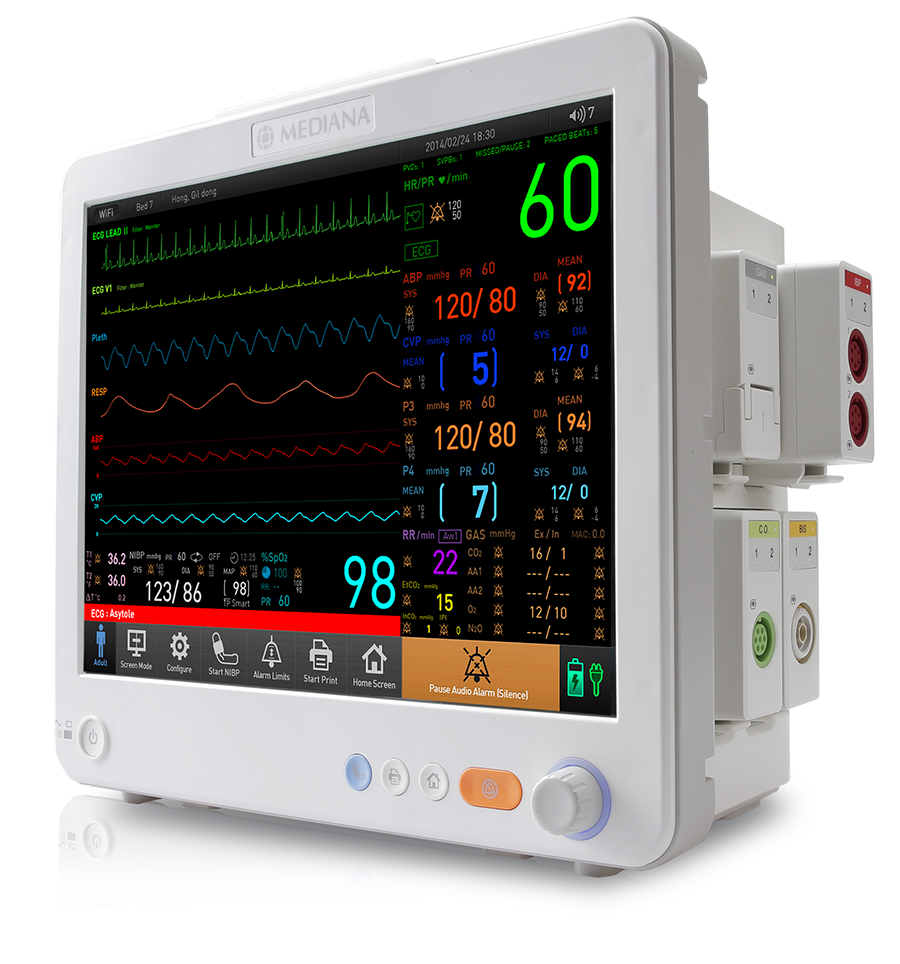
M50
Comprehensive Solution for your needs in Critical
and Intermediate Care
- 5 modules for extensive clinical application with widely scalable and post upgradable design
- All about user-friendliness with optimal SW & HW design with touch screen
- Extensive event review for Max' 10days
- Full disclosure of all parameters of event data review before & after 10sec'per each event case
- Optimized parameters for operation, ICU application : Multi-gas, Cardiac output, BIS, 12CH ECG, ETC02, 4CH-BP
- User friendly connectivity : HDMI, direct USB printer, USB/SD card for data management, USB for SW upgrade / Barcode reader usability
- Advanced communication connectivity : Ethernet (Lan, Wifi, WCDMA wireless and TCP/IP) for MEDIANA YM9000 Centra
Intended Use for the M50
The monitor is intended to be used to monitor electrocardiography (ECG), heart rate (HR), noninvasive blood pressure (NIBP) – systolic, diastolic and mean arterial pressures, functional arterial oxygen saturation (SpO2), pulse rate (PR), respiration rate (RR), capnography (EtCO2 and InCO2), Invasive blood pressure (IBP), Bispectral Index (BIS), Multi gas and temperature (Temp) for adult, pediatric and neonatal patients in all areas of a hospital and hospital-type facilities. Monitor users should be skilled at the level of a technician, doctor, nurse or medical specialist. The M50 is suitable for continuous operation.Note: Hospital use typically includes such as general care floors, operating rooms, special procedure areas, intensive and critical care area, within the hospital. Hospital-type facilities include ambulance, physician office-based facilities, sleep labs, skilled nursing facilities,
surgical centers, and sub-acute care centers.Note: The medically
skilled and trained user can be clinicians like doctors and nurses who
know how to take and interpret a patient’s vital signs. These clinicians
must take direct responsibility for the patient’s life.
This can include care-givers or medically trained interpreters who are
authorized under the appropriate clinical facility procedures to support
patient care. Any inappropriate setting, especially the alarm limit or
alarm notification settings, can lead to a hazardous situation that
injures the patient, harms the patient, or threatens the patient’s life.
This equipment should only be operated by trained users who can adjust
the settings of the vital signs monitor.